Permanent ExhibitionPermanent Exhibition
-
Civilization and Writing :
"The Great Journey of Writing and Civilization"
A Great Journey - The permanent exhibition sheds light on the world's writing systems, cultures, and civilizations from a comparative cultural perspective. Through exhibits based on storytelling, it examines the development and spread of writing from its inception and reinterprets written content in collaboration with various artists across different fields.
Prologue
- A Great Invention
In the prehistoric era without writing, humans conveyed thoughts and emotions through gestures and expressions accompanying speech.
However, as soon as words were spoken, they disappeared, limited by time and space. Humanity, in need of communication, wanted to overcome these barriers.
The invention that arose from this longing was writing, allowing words and sounds to be recorded.
Thoughts and emotions previously conveyed orally were now contained in written symbols, which did not disappear with the passage of time or changing of space.
The immortal desire for communication was thus recorded and reproduced through writing,
and humanity was able to expand its scope of communication.
The era of history unfolded for humanity.
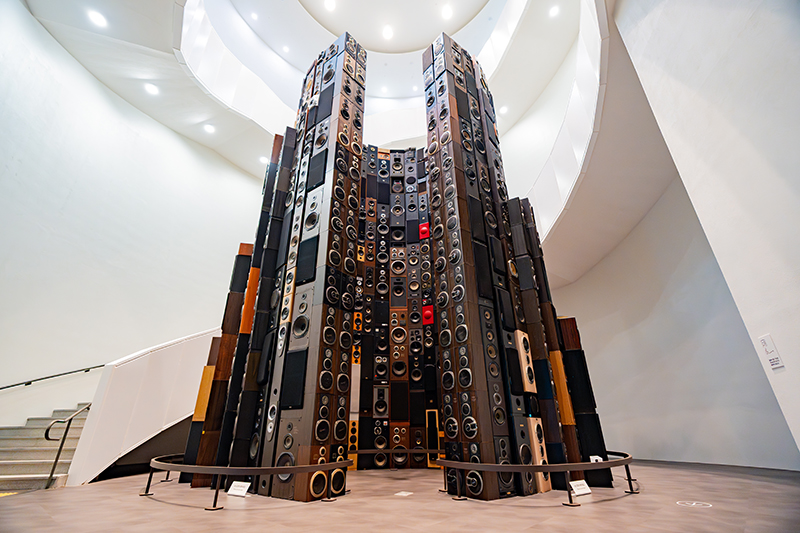
Part 1
- Writing Systems to Build a Road
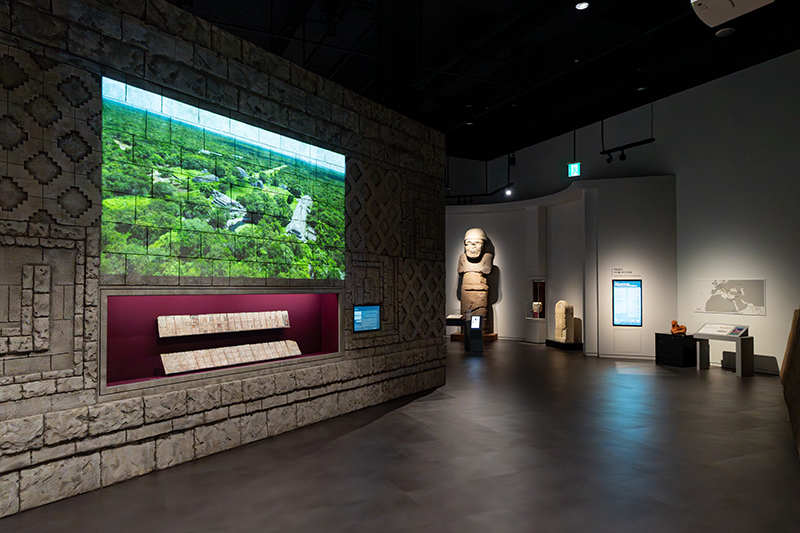
Surprisingly, scattered throughout the world, humanity has created or adopted its own writing systems suited to
particular environments, with only time separating them.
Based on this great invention, humanity has founded brilliant paths of culture and civilization.
Along with the rise and fall of culture, writing has been created and destroyed constantly.
Writing systems that could not adapt to changing environments disappeared, and new systems took their place.
Some writing systems had particularly strong communicative power, spreading to other regions.
Cultural competence or strong vitality helped a few writing systems spread further.
Sometimes, political relationships of domination and subjugation or religious beliefs heightened
communicative power. Trade also spurred the spread of writing.
As a result, Europe adopted Latin script, Southwest Asia adopted Arabic script, India adopted Devanagari-based scripts, and East Asia adopted Chinese characters and Hangul.
Historically, humans have used over 400 writing systems, but currently, only about 30 are in use.
In the timeline of ancient writing systems, Hangul was created relatively recently, but it still maintains its vitality.
It is a highly original writing system and a foundation of Korean culture.
-
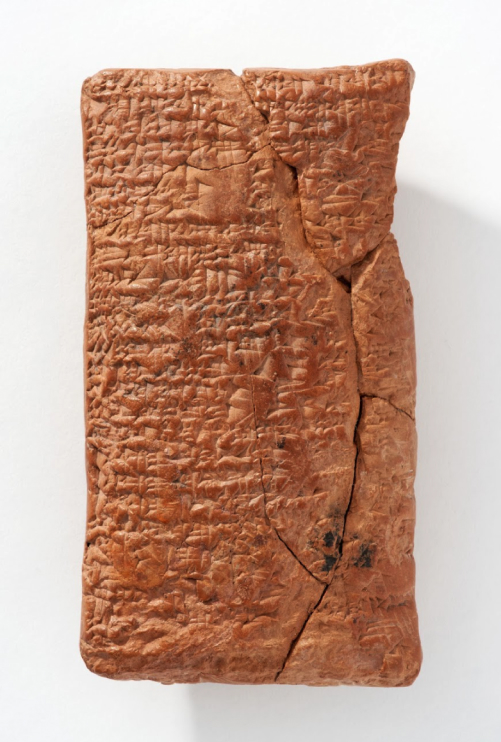
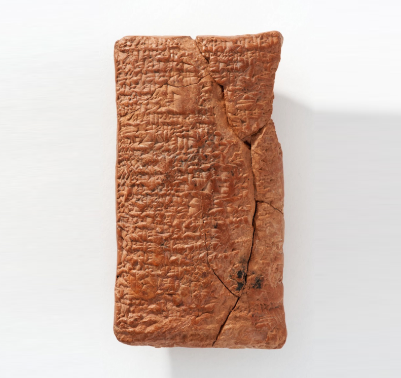 Cuneiform script of Sumer the original circular board with dots from 2000 BC to 1600 BC
-
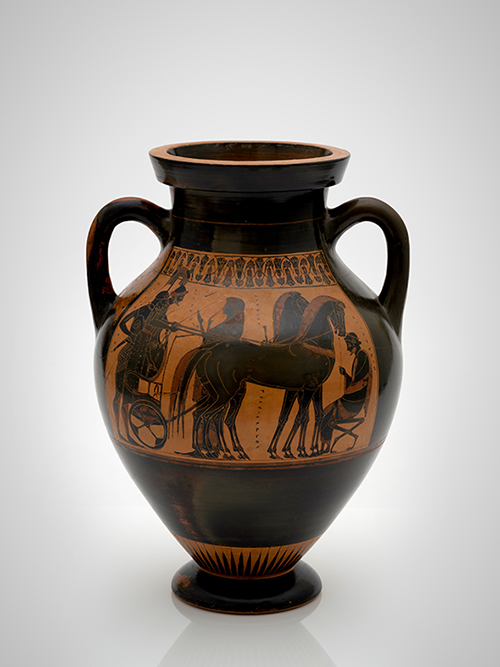
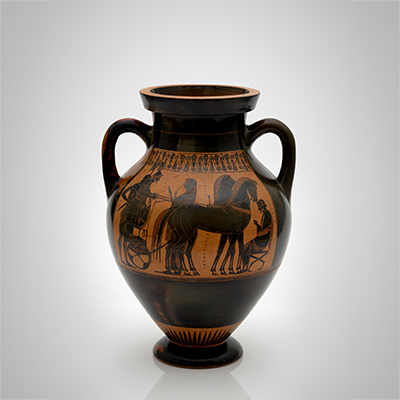 Greek script Attic Black-Figure Amphora, 540-530 BCE
-
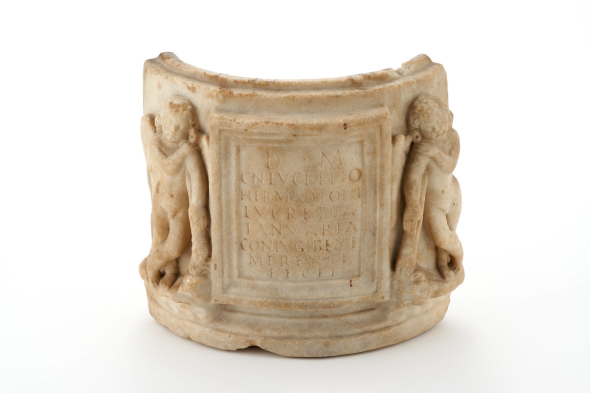
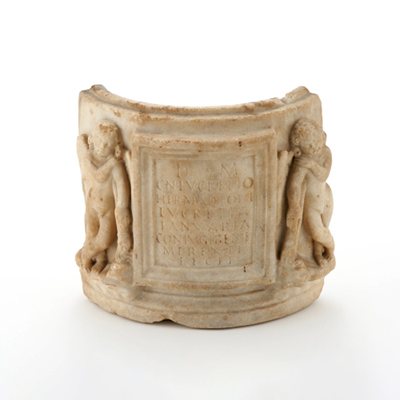 Latin script a marble sarcophagus the 1st to 2nd century
-
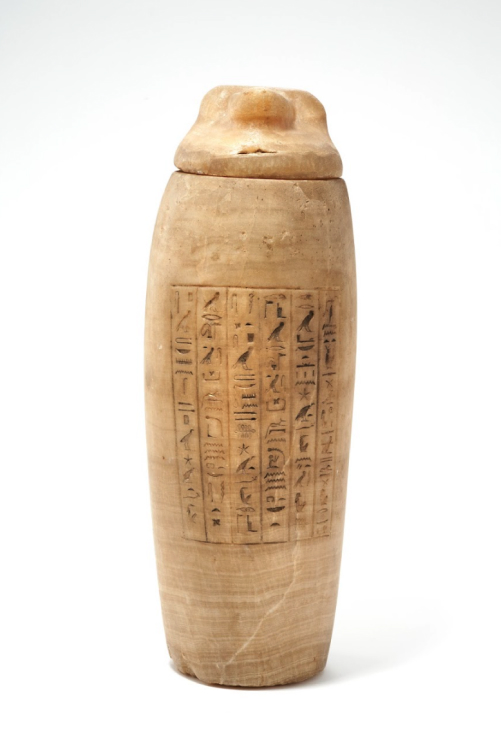
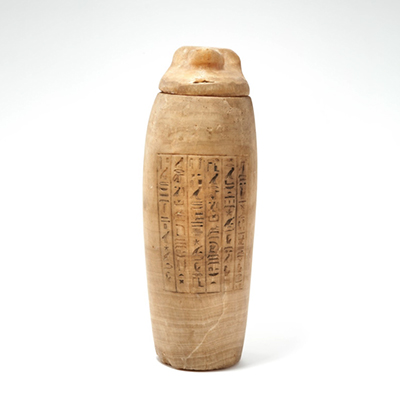 Hieroglyphs of Egypt a Canopus jar around 664 BC to 525 BC
-
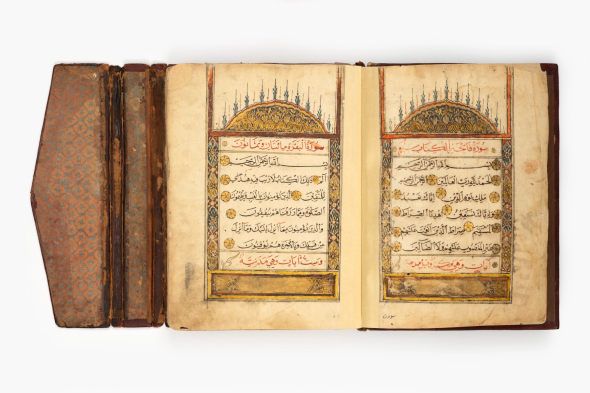
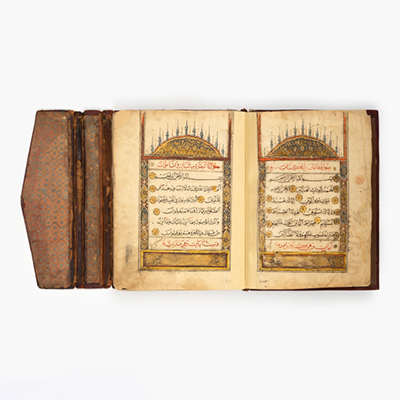 Arabic script the Quran 1300 to 1330
-
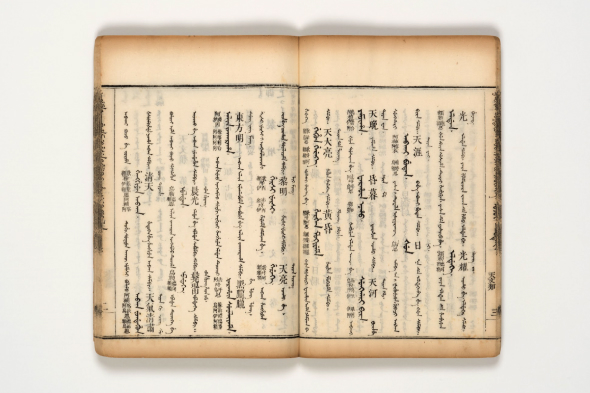
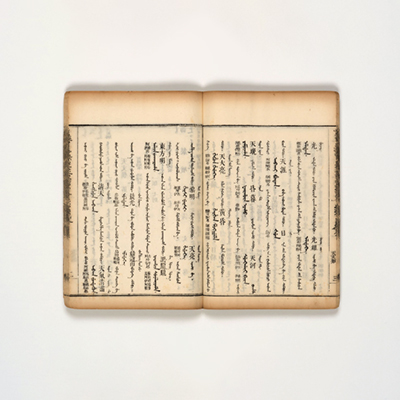 Manchu script the Jejungwon Medical Encyclopedia 1771
-
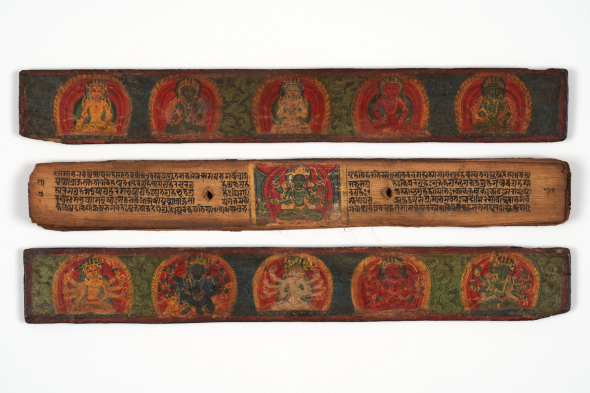
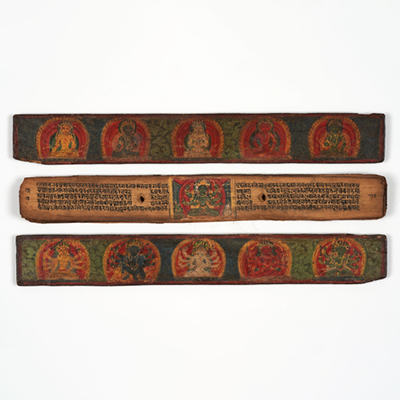 Nepali script he Prajnaparamita Sutra 1397
-
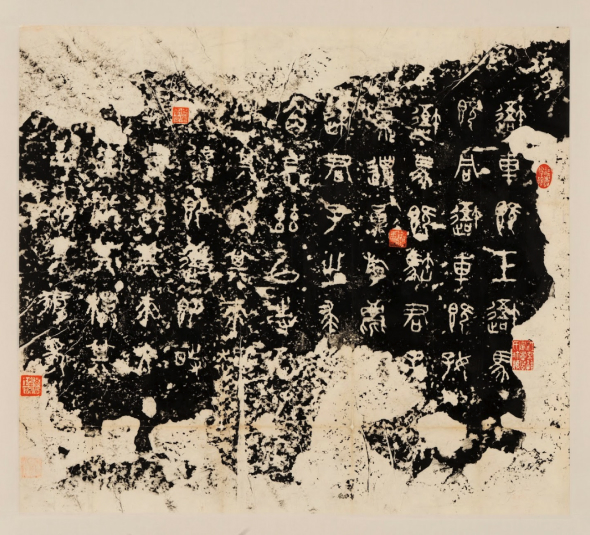
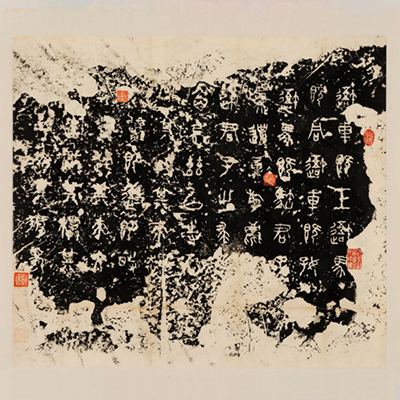 Chinese characters plaster rom the 5th to 3rd century BC and in the late Qing Dynasty (1616-1912)
Part 2
- Writing System to Create Culture
The power of writing has been tremendous in the process of creation and destruction.
Writing has shown itself to be a great force that brings old eras to an end and calls forth new ones.
Humanity brought forth a communication revolution with writing and used it as a foundation to
constantly reform social systems. The most brilliant communication revolution of humanity began with
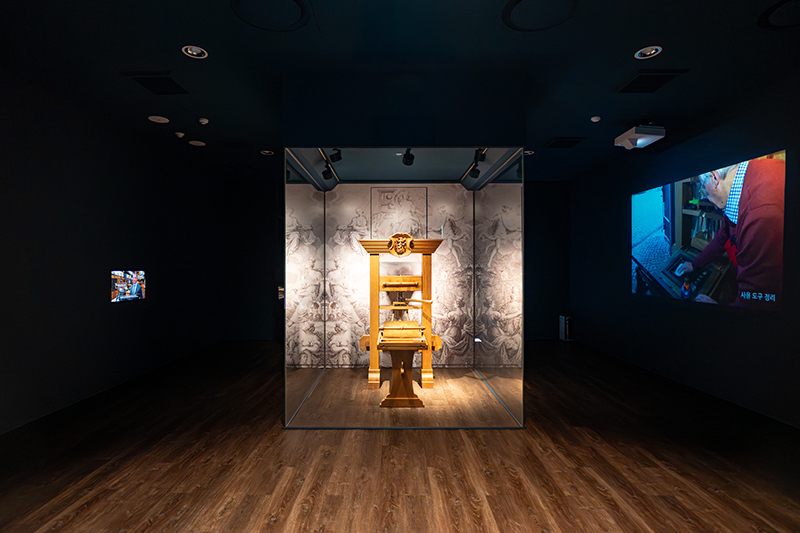
the popularization of writing based on printing technology. Books could be reproduced infinitely with the invention of the printing press.
As books became closer to people, they were increasingly translated and recorded.
There could no longer be a minority of authority and privilege.
The hidden force that supported civilization was paper.
The increasing demand for books had to be met by paper alone.
Improvements in fonts were also made to contain as much information as possible on limited surfaces and make
it easy for people to read books. Printing led to the popularization of human knowledge,
translation led to its spread and sharing, and recording led to its transmission.
Media and fonts reflect the technology of an era and drive the present and future of writing.
-
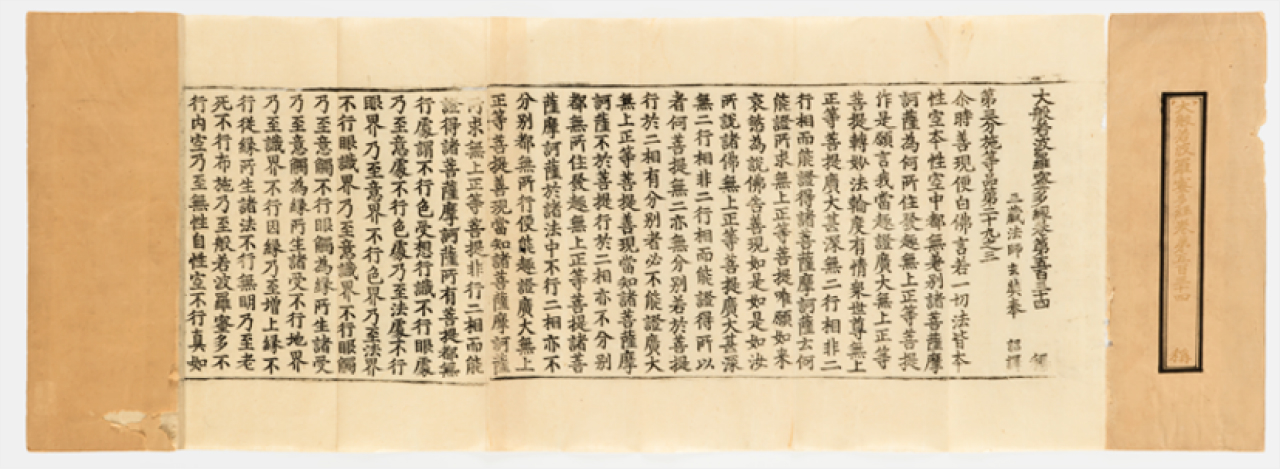
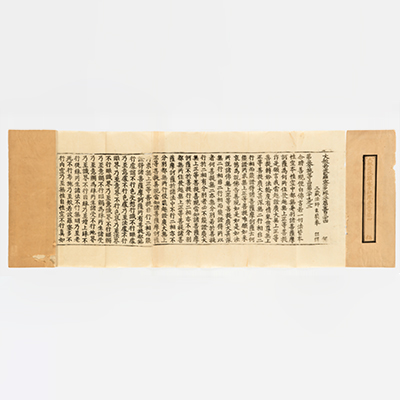 Revised Dae Banya Bara Mil-Kyeong, Volume 534 the Goryeo Dynasty from 1239 onwards
-
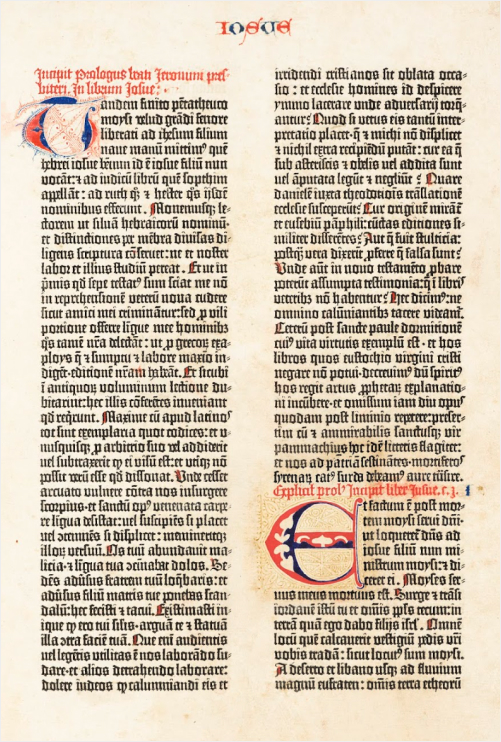
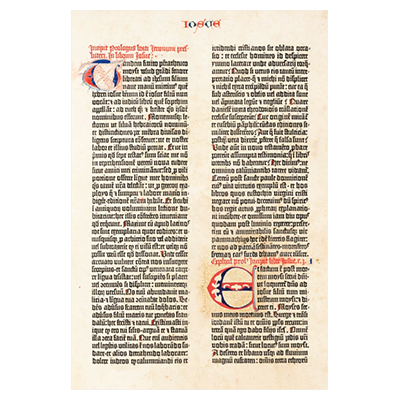 The Gutenberg Bible with 42 lines Germany, around 1454
-
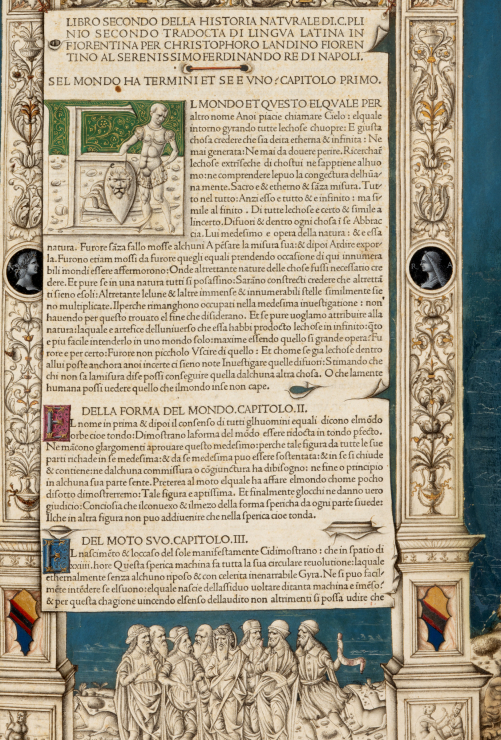
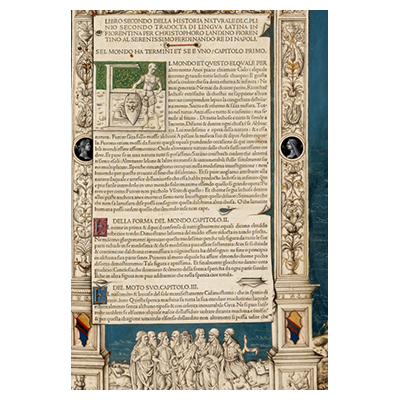 Natural History Italy, 1476
-
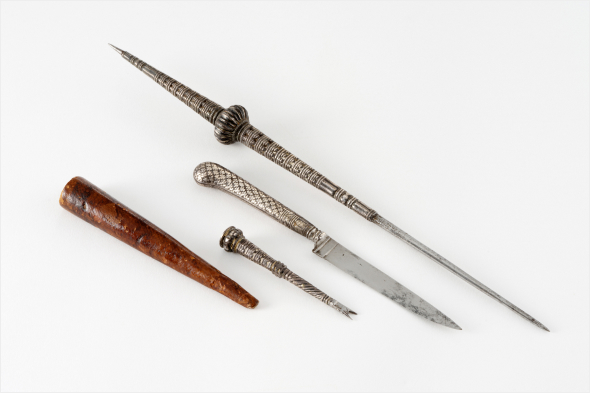
 Narayam (iron stylus) India, the 18th to 19th century
-
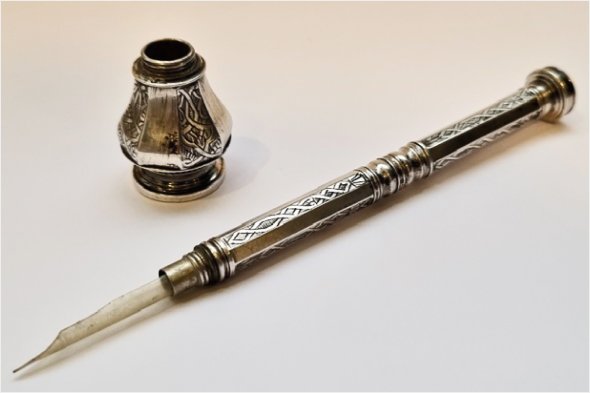
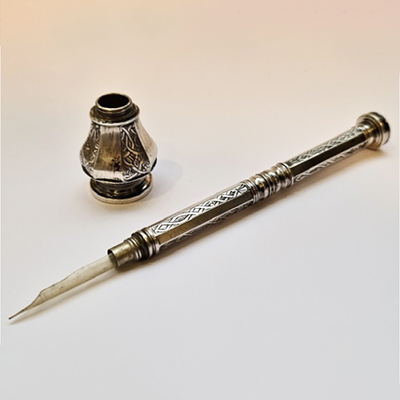 Penner France, around 1740
-
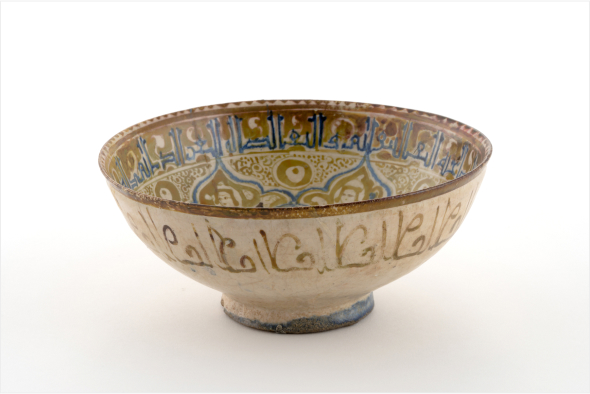
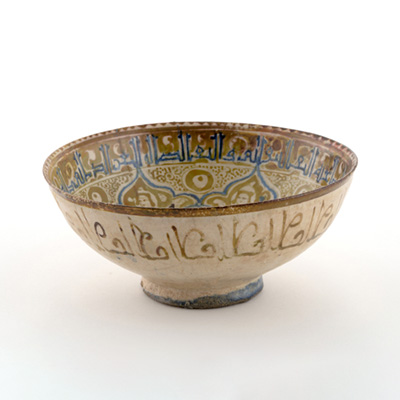 Copper box with Arabic script Iran, the 13th century
-
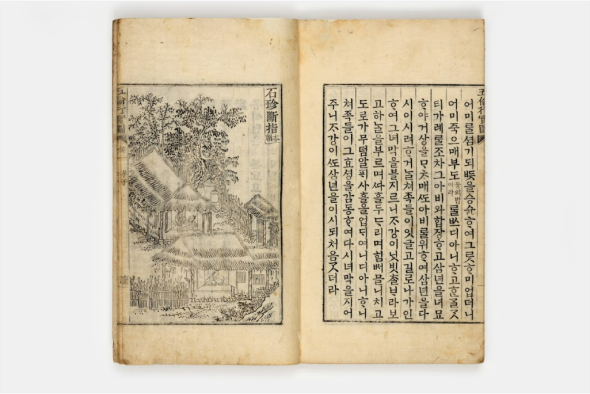
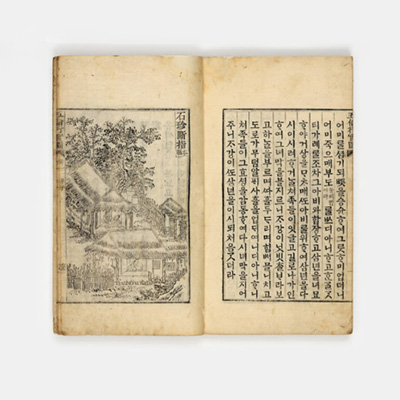 Oryunhaengshil-do (Illustrated Guide to the Five Relationships) the Joseon Dynasty in 1797
Epilogue
- Epilogue
Writing System of Tomorrow
Room of Quiet Contemplation
The way knowledge is shared through writing has also undergone significant changes.
At the center of this transformation is the digital medium, which has changed the way knowledge is stored and transmitted.
It has shaken up the book-based writing systems that previously relied on printing and paper.
The digital world has expanded the realm of writing to include images, video, audio, and even emojis.
It is a paradox of history that, while humanity once moved from pictures to writing, it is now moving back to pictures with the emergence of new pictographic writing systems.
The linguistic and writing barriers arising from race, region, and history are rapidly breaking down thanks to digital technology. Artificial intelligence-based machine translation technology that can acquire infinite knowledge is enclosing humanity within a single fence.
However, writing that cannot adapt to the technological age will disappear. Perhaps a new "world script" that all of humanity will use will emerge.